


FAMILY CORNER
NOT IN MY KITCHEN!!!
– Josiah Diaso
The topic of this write up describes the reaction of a friend I was interacting with when I reeled out some rather scary statistics of how dangerous a place the seeming cleanest of Kitchen is.
According to Dr. Charles Gerba, a microbiologist and professor at the University of Arizona in Tucson, “In most cases, it’s safer to make a salad on a toilet seat than it is to make one on a kitchen cutting board.” He went on to assert that the kitchen is actually the most bacteria ridden place in most homes. He found from his study that there are 10million bacteria per square inch of a kitchen sponge and 1m per square inch on a dish cloth.
Understandably, most people would react in a similar way as my friend when such statistics are read.
My first thought when I read the report was actually that of disagreement. I quickly waved it aside as some form of scaremongering as I reasoned how impossible it was for the kitchen to be more bacteria ridden than a toilet seat. However, upon serious thought, it then dawned on me that for most people, extra efforts are put into disinfecting our toilet environment because we easily see it as a polluted environment from the activity that goes on there, but not so much attention is given to the kitchen due to the assumption that washing the dishes and cleaning off wet surfaces automatically translates to disinfecting of the kitchen, and as such we leave the kitchen in a less than hygienic state, and a breeding ground for bacteria. The thought of it becomes even scarier when one thinks of the fact that everything that we ingest into our system is prepared in there.
The irony of the study was that most of the bacteria found in the kitchen are actually fecal bacteria (Bacteria normally found in excreta) including E Coli and Salmonella.
It gets even more interesting…
As a follow-up study, NSF International, a non-profit science organization set out to find out the most bacteria-ridden spots in the kitchen. The findings from their research is going to make up the subjects of evaluation for this write up. According to the NSF report, the hotspots for bacteria in the kitchen are;
- Dish sponges
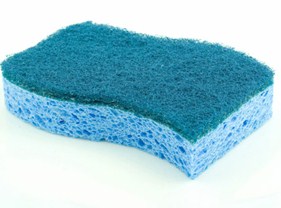 Scary isn’t it? Yes. All our utensils, dishes, pans, pots and silverwares must have to at one point or another pass through our sponges. Interestingly, it is the very fact of that, which makes the sponge one of the highest breeding ground for bacteria. Very tiny food particles are often inadvertently left on sponges even after rinsing with water and washed. This tiny food particles upon decaying (sometimes unnoticeably because of their small sizes) form attractions for flies and eventual breeding spots for bacteria. In most sponges, the very tiny crevices which are mostly invisible to the naked eyes are perfect hideouts for tiny food particles, which eventually become breeding spots for germs and bacteria.
To eliminate the prospect of our sponges serving as potential sources of diseases, regular disinfestation should be done. One way that this can be achieved is through heating. Our sponges could be put in a pot of boiling water or microwaved to kill bacteria which are mostly very susceptible to high temperature.
- The kitchen sink
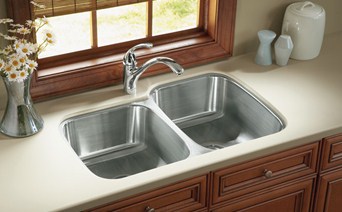 Food particles from plates left to soak or rinsed from dishes can serve as a breeding ground for pathogens including E. coli and salmonella. From kitchen sinks, bacteria can get in our hands or spread to foods. In most cases when we rinse off our kitchen sink with water and they appear to be clean, very often they are not. The drains on the kitchen sink are perfect hideaways for germs and bacteria that should be disinfected regularly.
To banish the germs and bacteria that is harbored in your kitchen sink, it is recommended that you wash your kitchen sink with a solution of bleach and water.
- Cutting board
Yes, this for me stand out…
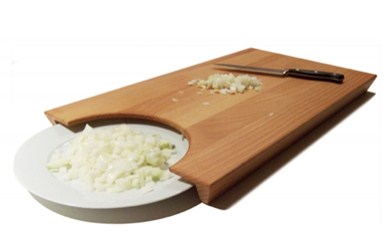 Tiny particles of meat and other food stuff are very often left on the cutting board unintentionally. Many people just rinse their cutting board after cutting poultry products and meat, thereby leaving behind salmonella which is one of the commonest cause of food-borne illness. Unfortunately, the same cutting board used for cutting meat is used for cutting vegetables and salad resulting in cross-contamination.
For elimination of bacteria, it is important that we disinfect our cutting boards after cutting poultry or meat in it. It is also advised that different cutting boards are used for cutting meat and cutting vegetables.
- Bottom shelf of the refrigerator
A quick glance at the refrigerator will reveal that the bottom shelf serve as drains for most of the moisture in the fridge; water drops from defrosted meat and other food items at the top shelf settle to the bottom of the refrigerator to form a cocktail of moisture laden with environment rife for bacteria growth.
Once every 2 to 3 weeks it is important to wipe every aspect of the refrigerator with disinfectant that is made for the kitchen. Importantly, raw meat should be placed on the bottom shelf tucked away in a drawer from everything else.
Now you know, as we celebrate this season, our kitchen should rightly be the place of joy and a safe haven free from germs and pathogens. Meal time should be happy times as we enjoy the food we love and not one of those times when we second guess on whether we are stuffing ourselves with bacteria that makes us sick.