
17 Oct

Finding Balance between Work & Relaxation

Finding Balance between Work & Relaxation

Obinna Igwegbe

Work-Life-Balance 3d

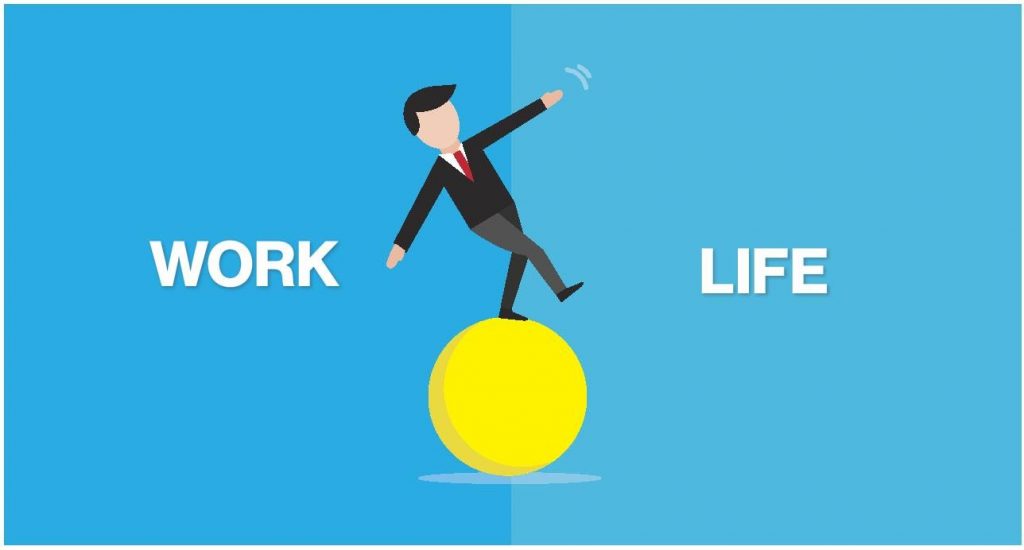
In this modern day and age, people work tirelessly for long duration and it seem like striking a balance between work and relaxation can be challenging. Certain things must be taken into consideration that is associated with personal relationships, career, finances and even physical and mental health. The inability to strike this all important balance is the main reason why stress is a common decimal for lots of people which inadvertently affect their work performance.

Many people find it difficult to separate work from everyday life while others are passionate about their jobs and these could be overwhelming. Some people feel that their career control their lives and this poses several health risks like; neck strain, headaches, back pains, sleeping disorders and even bad mood.

To maintain a healthy and productive life, it is essential to find a balance between work and relaxation. This in effect simply means knowing when to break off from work stress and take things easy. Some ways that can help in managing our increasingly busy work life and balance it with the need for relaxation are found below;

  1. Start your day right and be on top of things

Most individuals begin their day with a complacent disposition when they wake up in the morning. They leave their day to the uncertainty of chance and they spare no thought on prioritizing and being on top of their daily activities. Such attitude could hinder productivity for that day. It is essential to start the day right, plan the day ahead so you can be ahead.


  1. Knowing the importance of ‘ME’ time

No matter how busy your daily activities turn out to be after prioritizing, it is of importance to take a break at intervals to relax and free up your mind no matter how little time you can muster for this. The ‘me’ time could be watching your favorite television show, reading a book or going to a spa. Remember spending quality time for yourself is important for your overall wellbeing.


  1. Have a stress free environment

It is essential to make your home or work environment a stress free place either naturally or artificially to make you feel happy and calm. You may add more plants in your home, put favorite photographs or art works. Furthermore, pay attention to your environment’s ergonomic design by having the right type of working chairs or table, proper lightning and ventilation
Blog-6-Work-Life-Balance-page-001

  1. Eat healthy

People most times consciously or subconsciously suppress hunger especially when they have a busy daily schedule, this is a wrong life style. It is important to eat healthy and in moderation. Also eating slowly can help you digest your food better. Lunch breaks/coffee breaks shouldn’t be just about eating or drinking coffee. Use free time to relax so that you’ll have renewed energy to go back to work.


  1. Meet new people

Introverts are always known to spend more time reading books and staying in their thoughts, much as this is a desirable activity to engage in and it may be their own way of relaxing, it is important to note that networking and socializing with new people is vital. Setting out in a day you should have a mindset of being outgoing, enthusiastic and active. Having fun with friends can help you deal with work better while meeting new people can improve your social skills and intellect.


17 Oct

Turning the tables around

Turning the tables around

(Dealing with Conflicts in the family)

Turning the tables around

Conflict is a natural fallout of social interactions. Indeed the differences that exists in the needs, desires and idiosyncrasies of people make for an environment suitable for conflicts. It must be mentioned that conflict is not necessarily a bad thing, it can actually be a good thing as it provides differing angles to situations and things. Rather unfortunately, many of the violence that the world has known and as a matter of fact that is still bedeviling the human race today is people’s inability to tolerate and cope with differing views, beliefs and attitude. Well of course people may hold very outrageous positions on situations and things, that may be very difficult to come to terms with, but then that is what makes the human race an interesting collection of beings. Such differing views must be addressed with some level of empathy and understanding.

The sad situation of intolerance to differences regrettably finds its way into the family unit. It is a given that a family is the smallest social organization with interacting parties, and hence a perfect place to gain firsthand experience on conflict and conflict resolution. Today, with the increase in failed marriages and abusive relationships, we can easily see that intolerance has its roots in many families. Couples unable to come to terms with the fact that first and foremost their spouses have a right to be different and to hold differing views and also that differing views can be handled and managed in such a way that it can be a strength rather than a weakness for the family, have given up on beautiful relationships. Such prejudice are a product of some sort of stereotypes that ascribe some sort of expectations to our spouses; expectations that they must and should hold views similar to ours thereby abhorring every disposition to the contrary.

turn_tables_blue

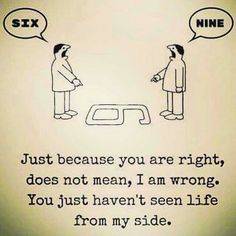
I saw a quote once that perfectly describes how conflicts and disagreement should be handled, especially with regards to people’s belief and attitudes, the quote reads “do not judge me until you walk in my shoes”. Empathy defined as the ability to understand and share the feelings of others should inform every conflict especially within a family, we must “Turn the tables around”. We must recognize people’s difference and appreciate them, especially when they were formed by circumstances different from ours. Acting without empathizing with other people’s position is akin to acting in malice. According to American liberal journalist Charles M. Blow “One doesn’t have to operate with great malice to do great harm, the absence of understanding and empathy is sufficient”.  Children must be taught to recognize that there will be times when people will not meet their expectations, when people will not hold their position and when people’s belief will be completely alien to theirs. They must be taught to recognize these differences and embrace them. They are what make us unique. As a family, being diverse is our strength, it makes us resilient. We must not be quick to admonish or advice from our standpoint, empathy and understanding must precede advice. Just because you are right does not mean the other person is wrong, it could just be that the person has a different looking glass. Bill Bullard affirms that “Opinion is the lowest form of human knowledge. It requires no accountability, no understanding. The highest form of knowledge is empathy, for it requires us to suspend our egos and live in another’s world. It requires profound purpose larger than the self-kind of understanding”.

0daa13dca2b90574bd3574f7531f3072

17 Oct

What you should know about Epilepsy

What you should know about Epilepsy


is_151209_brain_epilepsy_800x600

Culled from jw.org

Contributed by Adesekhai Francis

An acquaintance falls to the ground, unconscious. His body stiffens, and his head and limbs begin to convulse. If you know that the person suffers from epilepsy, you can provide adequate assistance while waiting for help. Let us explore some basic facts about this often misunderstood disorder


What is epilepsy? Epilepsy is a brain disorder that produces brief attacks called seizures. The entire seizure usually lasts less than five minutes. The situation described at the outset of this article is typical of what is called a grand mal seizure.

What causes seizures?

Researchers believe that seizures occur when there is an abnormal surge of electrical activity between brain cells. Just why this happens remains unclear

If I see someone with epilepsy having a grand mal seizure, what I should do?

Bystanders  should let the attack run its course and not  interfere with the patient, beyond checking to make sure the person is in no physical danger and can breathe, ”says the encyclopedia of the brain and brain disorders. On the other hand, the book says: “An ambulance should be called if the seizures continues for more than five minutes, if another seizures immediately follows the first or if the person does not regain consciousness a few minutes after the seizures ends

How can I help the patient while he is having a seizures?

Place a soft object between his head and the floor, and move sharp objects away from his head. When the convulsion stop, turn the patient on his side as shown in the accompany diagram

What should I do after the patient awakens?

First assure him that everything is all right. Then help him to stand upright and guide him to a place where he can get needed rest. Most people are confused and sleepy after a seizure; others recover quickly and can continue what they were doing before the attack.

differentseizures-forwebpage_0

Do all epileptic seizures include convulsion?

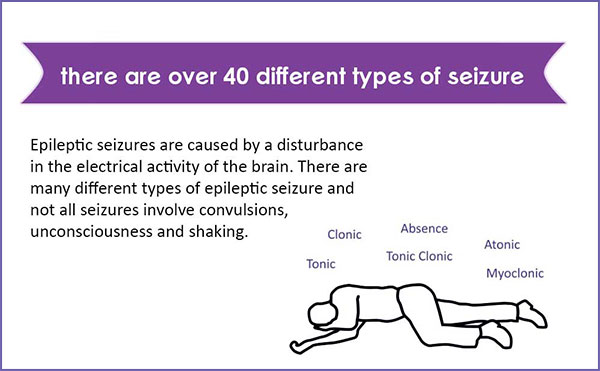
No. some patients experience a moment of impaired awareness without even falling to the ground. This is called a petit mal seizure (or absence seizure), which is usually brief with no lingering aftereffects. Some people with epilepsy undergo prolonged petit mal seizures, lasting several minutes. In such a case, the patient may wander around the room, tug at his clothing, or otherwise behave strangely. After the seizure, he may feel light headed

What is it like to live with epilepsy?

Understandably, many people with epilepsy contend with a nagging fear of when and where the next seizure will occur. To avoid embarrassment, they may intend to avoid social situations

How can I give support to someone who has epilepsy?

Encourage him not to bottle up his feelings. Be a good listener. Ask him what he would like you to do if he has a seizure. Since many people with epilepsy do not drive, perhaps you could offer a ride or run some errands for him

Can seizures be reduced or even prevented?

Some factors increase the likelihood of a seizure, such as stress and lack of sleep. Experts therefore encourage epileptics to get proper rest and to exercise regularly in order to reduce stress. In some cases, indications have also been effective in preventing seizures

WHO-EpilepsyInfographic_4Pieces

17 Oct

You are your belief

You are your belief

Your-Belief-System-Rules-Your-Life

I can safely say that people generally are a product of their beliefs. What we are, what we have and what we will become are all a function of our belief. In truth, you can never be more than the sum total of all your beliefs. It therefore means that if we must attain any level of success in anything we do or plan to do, we must first get there at the level of belief we must convince ourselves that we can. Very often because of its subtlety, people do not realize what a belief system is first and foremost and that every single day, they are in the process of their belief system being created.

This write attempts to unveil what our belief systems are, and to give us an insight on how they work and how they are being created.

belief-system-300x209

Your belief system are those things you hold as true about yourself, things and people around you and the world generally. They are like the silent voices in your head that influence how you appraise reality. Many people have called it our internal conditioning that gives individual meaning to the world out there and who we are. Significantly, our belief system is located in a portion of our mind we have no conscious control over. It is almost like the software programmed into a computer system that gives functionality to the computer system. Many of us grew up in communities that have folklores and superstitions that passed down through generations by stories told by forebears and parents. Such stories and folklores that are held as true by members of such communities become part of the basis for how people from that community ultimately view reality. There is a community in Delta state that reveres the reptile Iguana, which they see as deity. Such belief system created by stories told by forebears about the reptile inadvertently informs the behavior towards that portion of reality (the reptile); they don’t kill the reptile, and they allow it enter their houses at will. This clearly shows that our beliefs are created by the things we have heard and read about ourselves, other people, things and the world around us; which in any case may be true or false. Our beliefs can also be created and/or influenced by experiences gotten from our interactions with reality, and the people with whom we spend our time. All your life you have heard, seen and experienced things, we have interacted with people, and this all currently now form the basis of why you perceive things the way you perceive them, almost as if the old adage “seeing is believing” is more appropriately reversed to “believing is seeing”. In other words, we see what we believe. For the purpose of this article, self-belief is our primary interest. This is because your belief about yourself and your abilities determine your capabilities. The things you decide to do or not do depends chiefly on your belief about yourself and things. According to Brian Tracy, “you always act in a manner consistent with your beliefs, especially beliefs about yourself”. For example, while growing up, it is a belief among girls that Mathematics and Engineering are fields for men, and this belief largely attests to the rather few female engineers and mathematicians we have around until relatively recently. It is such limiting beliefs that creates the fear that cripples the creativity needed to excel in mathematical and engineering fields, and not necessarily because men have better intellectual capacities. It is all a function of belief.

I-belive-in-you-630x315

How many times have you been told that you cannot do a thing well, that it is beyond your capacity, see how powerless it can make you feel before that thing when you believe it. I am one of those people who believed that mathematics was too difficult and I could never be good at it, and true to it, I never learnt mathematics well enough to pass it with a good grade during my secondary school days, probably because of the kind of teacher I had earlier mathematics was painted as a very difficult subject. This negative belief followed me into my earlier days in the university, until I “re-created” my beliefs about my mathematical abilities, then I started teaching my colleagues statistics, which requires a relatively strong mathematical background. All that changed was my belief about mathematics, and then my behavior towards it changed, and then it unraveled itself before me. Your belief influences your behavior which in turn affects your outcome. A time ago, it was believed that nobody could run a mile in less than four minutes. It was thought that the human body lacked the ability to sustain such feat. Everybody but Roger Banister believed it. After Roger Banister broke the four minute barrier in 1954 by running a mile within four minutes, other runners duplicated the feat within months. Right now records have been broken that completely rubbished the former belief of the inability of the human body to run a mile in four minutes. What changed in the runners after Banister did it? Belief, and their body responded. The good book admonishes that nothing is impossible to the man who believes. We are only limited by our belief system and pattern of thoughts. Henry Ford said “If you think you can or you think you cannot, you are right”.

Belief sign with a beautiful day
16 Oct

Making a Culture of Safety the Foundation


Culled from Knowledge at Work (www.ulehssustainability.com/blog)

11387037_l-800x531

Safety is a familiar concept to us all. We read safety reports before we buy a car, instruct our children to wear bicycle helmets, and buckle our seat belts in the car. We are surrounded by safety labels on everything from plastic bags to hair dryers. But how often do we talk about safety in our workplace, where we spend one-third of our adult lives?

The answer to this question is probably not often enough. Data show that each year an average of 3 million people in private industry face some kind of injury as a result of their jobs. In many industries, injury costs can exceed profit in a given year.

At its core, workplace health and safety has four essential parts:

  • Culture—the values, assumptions, norms, and everyday behaviors of an organization’s people,
  • Compliance—meeting mandated regulatory standards,
  • Risk Management—processes to better identify risk and to control exposures, and
  • Governance—establishing controls by which an organization can validate and ensure compliance standards and policies.

To truly create lasting change, organizations must create an environment in which safety is more than just a box to be checked, but is an attitude that makes up the very foundation of the company and is upheld by everyone from front line workers to senior management.

Committing to a Culture of Safety. A culture of safety can be defined as the collective values, beliefs, attitudes, and norms that shape individual safety-related behaviors in an organization. Establishing this culture begins with an organization’s senior management. If senior management is committed to improving safety, fostering the success of a safety program, and empowering everyone within the organization to be part of a solution, then a culture of safety can flourish. With a culture of safety, everyone looks out for one another and encourages injury self-reporting without judgment or consequence. It’s about improving the culture and system as a whole to find the causal factors that led to those injuries or mistakes.

Analyzing Safety Risks. Establishing a culture of safety and effective safety program requires an honest assessment of an organization’s risks. In order to appropriately assess risk, it is critical to form a health and safety team that directs all workplace health and safety initiatives. It also can be useful for companies to engage third-party workplace health and safety providers. Many assessment, evaluation, and survey tools are available to ensure that decision-driving safety information reaches senior management. While such tools can be quite valuable, they do not address the potential underlying issues that may exist within a company’s internal processes. A culture of safety is most impactful when it complements an already solid foundation of internal policies and procedures that can, in turn, uphold and reinforce the culture.

Investing in a Culture of Safety. There are several ways to invest in safety. Ensuring safe facilities is one key measure. Creating systems to track and prevent safety concerns is another. These systems can be technological, such as an incident management system. They also can be infrastructural, such as simple mechanisms for employees to voice safety concerns and suggestions. Regardless of what form they take, these systems must engage employees in the safety of their environments and offer them ways to proactively be a part of improving it.

Making Training a Priority. One of the most important ways to invest in employees is by offering thorough and ongoing training opportunities. A learning-centered approach transforms knowledge from training into action that drives bottom-line safety results, including risk reduction and injury/illness/loss prevention. From an employer’s perspective, training can be viewed as necessary, but costly. However, data shows that it is, indeed, better to be safe than sorry.

Implementing a Culture of Safety. Another critical step in implementing a culture of safety is developing, enforcing and committing to a robust workplace health and safety program. The success of a safety program correlates with the level of accountability that exists in an organization. Accountability requires clear communication and the capacity to monitor behaviors and measure results. Top technology solutions support accountability measures with automated scheduling and notifications, scorecards to track leading safety indicators and performance management metrics. But even the most advanced management and incident tracking systems are of little value if employees don’t understand their role in using these tools to help make the workplace safer.

Maintaining a Culture of Safety. Once a culture of safety has been developed, organizations must constantly reinforce safety messages, stress the importance of it being a team effort, and regularly evaluate progress to ensure the overall strength of the culture. Check in with employees and management to get their feedback and suggestions for what’s working, what’s not and how to improve. This team-centered approach will once again reinforce the idea that ‘‘we’re all in this together’’ and contribute to employee buy-in.

It’s a Marathon, Not a Sprint. Establishing a culture of safety involves a fundamental shift in thinking and behavior and organization-wide commitment. It takes time to create and time to foster, but it is an investment well worth making because of the positive impact it can have on the health of any business and its workforce.


07 Jul

THIS & THAT

THIS & THAT

LAUGHTER THERAPHY

One of the free gifts given to every man is “LAUGHTER” and it’s a natural medicine that lifts our spirit and makes us happy. Laughter is contagious and physiological activity that does not necessarily require a mental trigger; you can get into a bout of laughter just by being in an environment of laughter. It brings people together, strengthens friendship as well as makes us feel more alive and empowered.

Laughter is an excellent way to reduce stress in our lives and can help you cope with and survive a stressful lifestyle. Naturally the body cannot distinguish between real and fake laughter, however anything that makes you laugh would definitely have a positive impact. You don’t need to be happy or have a sense of humor to benefit from a good laugh.

clown

LAUGHTER THERAPY

Another consideration when it comes to laughter is its therapeutic effect also known as “LAUGHTER THERAPHY” which is the use of humor to promote overall health and wellness by providing a full scale workout for your muscles and unleashes endorphins which relieves physical or emotional stresses or discomfort.

In the workplace laughter therapy helps keep employees happier and more committed and improves their overall inter-personal skills. Some of the physical benefits of laughter therapy are considered below;

  • Produces a General Sense of Wellbeing
  • Reduces Stress/Relaxation
  • Pain Relief
  • Strengthens Social Bonds and Relationship
  • Heart and Lungs Stimulation
  • Relaxation of Body Muscles
  • Balance mental functions (i.e., alertness, memory, creativity)
  • Triggers the Release of Endorphins (the body’s natural painkillers)
  • Enhances Oxygen Intake
  • Soothes Stomach Aches and Aids Digestion
  • Balances Blood Pressure
  • Enhances the Quality of Life
  • Promotes Relaxation